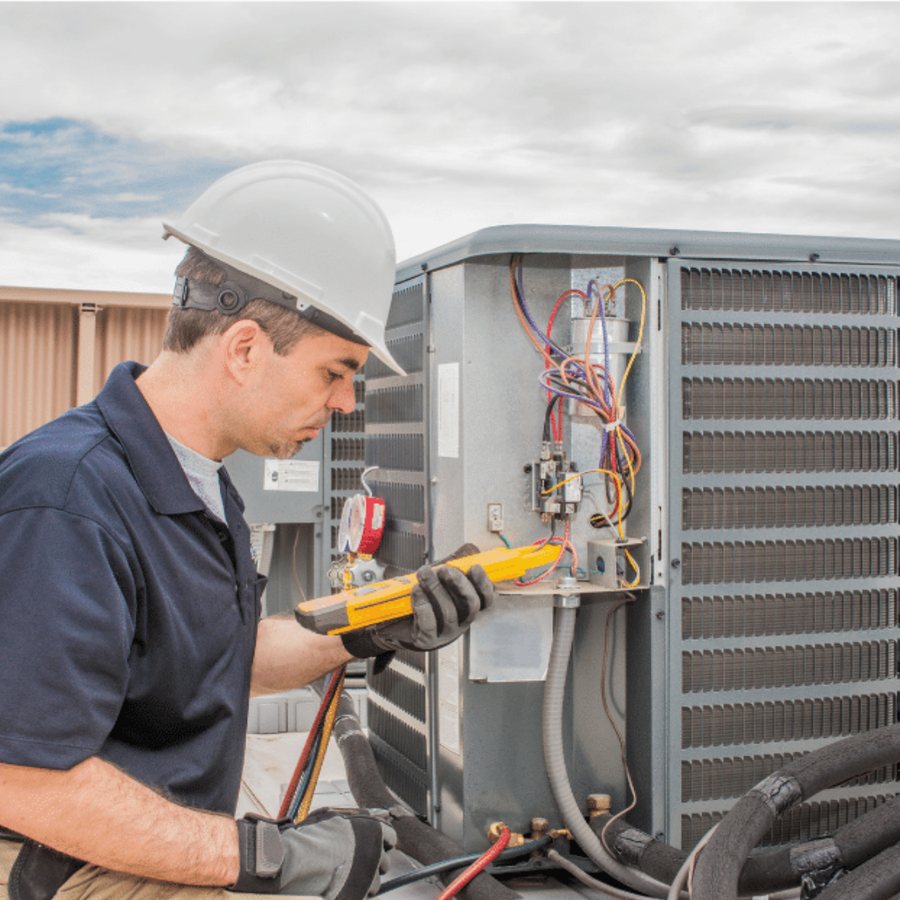
Request ac repair for a property in Richmond Hill. Include the equipment, the problem or planned work, and your location so the request can be reviewed.
How can I tell whether a cooling problem is in the air conditioner or its controls?
An air conditioner that blows warm air, cycles unusually, drips, or makes a new noise needs diagnosis based on its equipment type and operating symptoms. Central systems and ductless units have different airflow paths and controls, while inverter-driven equipment may behave differently from conventional models. Inspection findings help separate a repairable electrical, drainage, or airflow fault from a refrigeration-component problem. The system’s age, condition, and service history matter when comparing repair with replacement.
Note whether the problem affects every room or only one ductless head, when it begins, and whether cooling stops or merely weakens. Model information, error indications, filter condition, condensate symptoms, and recent service records help direct inspection. Refrigerant-side diagnosis requires appropriate instruments and qualified handling; a symptom such as warm air alone is not proof of a refrigerant leak.
Central-air and ductless cooling faults
Inverter operation, airflow, coils, and condensate
Refrigerant diagnosis and repair-versus-replacement decisions
Assessment and Scope
Questions for the Proposed Work
01
Compare central and ductless symptoms
For central air, weak cooling throughout the home may involve the outdoor unit, indoor coil, thermostat, or duct airflow. A ductless head that drips or loses cooling may instead involve its condensate path, coil, sensor, or individual operating mode. Inverter-driven compressors use variable operation, so cycling should be assessed against the model’s controls rather than judged by assumptions about conventional equipment.
02
Use inspection results to distinguish repair from maintenance
A confirmed fault calls for repair, while maintenance addresses condition and operation without assuming a component has failed. Inspection may assess coils, airflow, condensate drainage, thermostat response, and refrigeration operation according to the equipment instructions. Refrigerant charge should be evaluated with proper testing, not topped up as a routine measure. Records of prior leaks, cleaning, or electrical work can help explain repeat symptoms.
03
Evaluate major repairs against system condition
A specific failed control or drainage part may support repair when the rest of the system is in sound condition. A major compressor or coil fault on older equipment calls for a broader comparison, considering repair scope, available refrigerant, compatibility, and the condition of other components. Age by itself does not settle the decision. Central and ductless replacements also differ in connections, indoor equipment, and control requirements.
Compare the next step
Identify each cooling system and the spaces it serves before comparing performance. Ask whether a complaint belongs to central equipment, an independent head, or shared controls. A useful repair plan names the affected system and its interfaces rather than assume all warm rooms depend on the same outdoor unit.
Do not open electrical panels or handle refrigerant. If ice, water near electrical equipment, or abnormal operation is present, stop using the affected system and request an assessment.